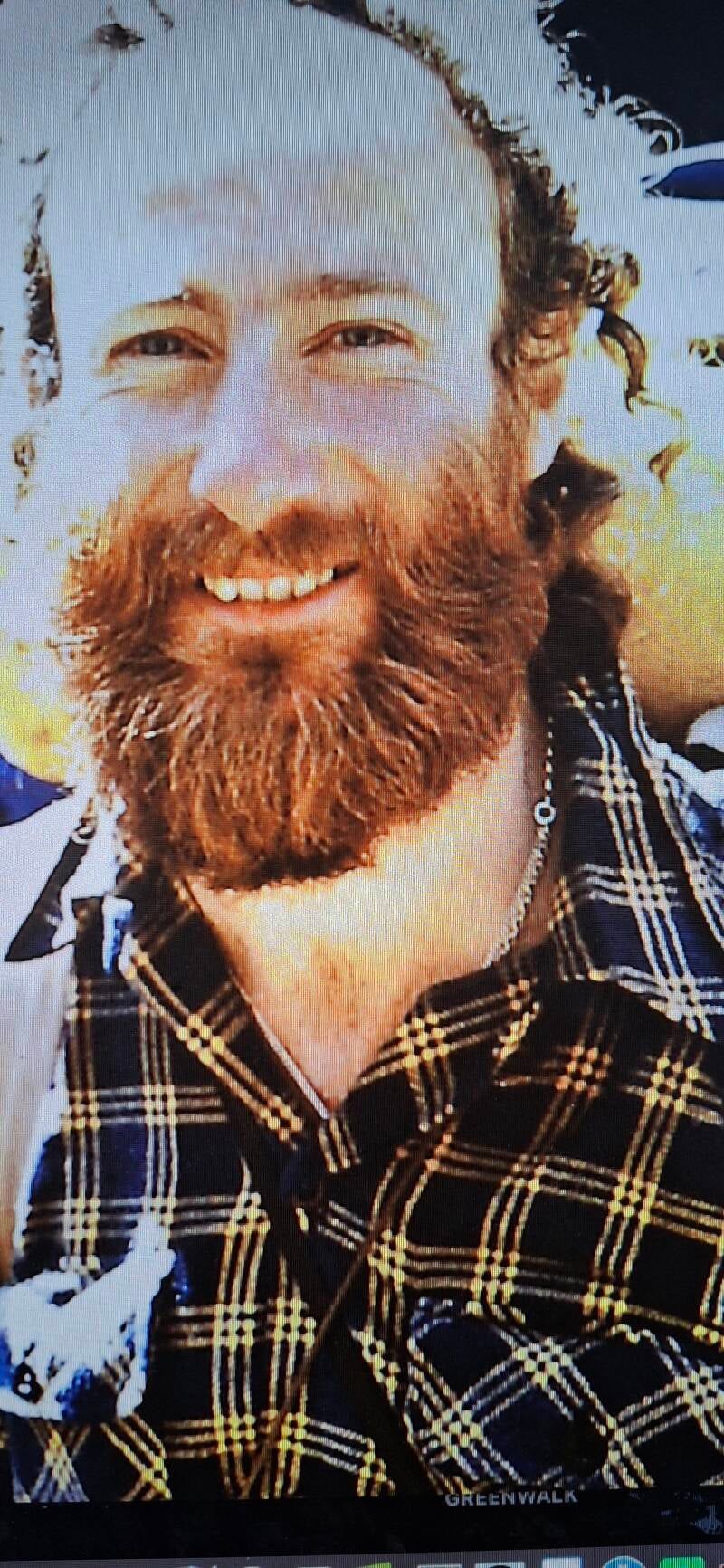
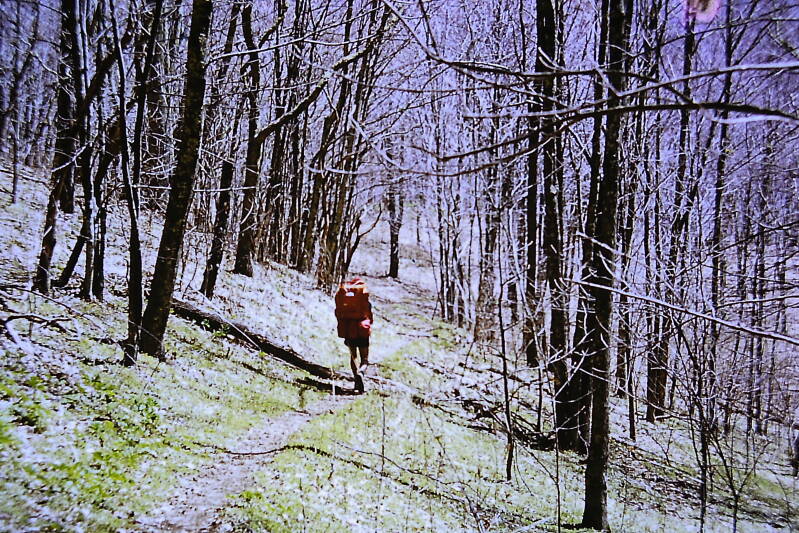
My tired 152nd pair of boots which are falling apart after 800 miles!
THE MAN WHO WALKED SERIES - by Revd. John Merrill
Four volumes attempt to cover more than 228,000 miles I have walked so far, wearing out 154 pairs of boots, both here in Britain and abroad. They are not intended to be literary masterpieces but a record of one man’s unique walking achievements. which have resulted in writing more than 500 walk guides and stories.
Vol One - The Man who walked the Peak District. -The story of how it began and how he wrote more than 150 guide books to the area, walking every path.
Vol. Two - The Man who walked Britain - his ground breaking marathon walks and walks that he has created. More than 120,000 miles of walking. Includes 1,000 mile walk through the Hebrides; 1,000 miles through the Orkney & Shetland Islands; 1,500 miles up the west coast of Ireland; a 2,200 mile walk linking all the National Parks, highest peaks and trails in England and Wales; a 1,608 mile Land’s End to John O'Groats walk and his record breaking 7,000 mile walk around the Britain’s coastline.
Vol Three - The Man who walked Europe - He has walked almost all the routes in France, Spain, Italy, Austria, and Germany.. Includes his 3,000 mile walk across Europe and Alps, and numerous walks to Santiago de Compostela.
Vol Four - The Man who walked America and Asia - His stories of walking the Appalachian Trail, Pacific Crest Trail, the Continental Divide Trail, The Buckeye Trail, his 4,260 mile coast to coast walk across America and many smaller trails. Plus five expeditions to the Himalayas and walking all the trails in the Hong Kong Islands.
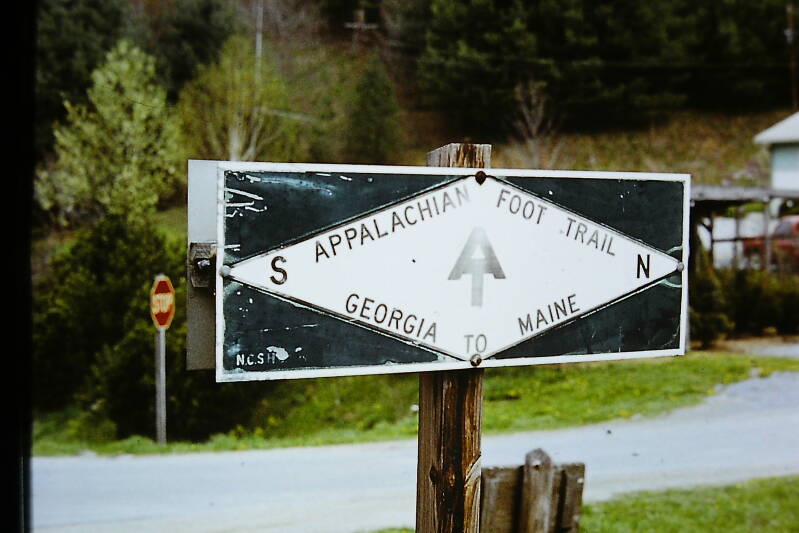
THE APPALACHIAN TRAIL
- bare hiking facts.
Conceived by Benton Mackaye who proposed the trail in 1921. Completed in 1937 becoming known as the Appalachian National Scenic Trail or simply AT.
Stretches approximately 2,200 mies/3,540 km, from Springer Mountain in Georgia to Mount Katahdin in Maine, via 14 states , along the eastern side of America.
Along much of the route, every 8 or more miles are three sided wooden shelters for hikers to sleep in. Fresh water was nearby.
Post offices along the route keep food and equipment for hikes to collect on their walk - usually 3 months with the hiker’s approximate date marked on the parcel. These towns are approximately 14 days apart with all facilities - motel, restaurant, Laundromat, food store, Post Office and bank.
Unfortunately, as I found out, where the trail crosses private land. the owner has the right to either endorse the trail or refuse it. In that case it is re-routed, making a longer walk. It was this reason i walked 2,400 miles. One re-route was supposed to be 5 miles but took all day - about 20 miles!
Wildlife - brown bears are frequently seen, but normally amble away. I did have the enviable sight of watching a mother and cub ascend a slope, eating berries. I stood still, didn’t take a photo, just privilege to enjoy the beauty of the scene unfolding closeby.. Never get between the mother and cub for this could have life threatening consequences. The shelters in the Great Smokey National Park, all had metal grills across the front to keep the bears out. At night they would alarmingly rattle the screen!
Snakes were a daily hazard but I was never bitten. I always watched where I placed my feet, and kept my distance and just admired the rattlesnakes. One rocky dell was like a film set with rattlers on the ground and hanging down from the trees were four feet long rat snakes. Thankfully they are not poisonous.
Mosquitoes were plentiful but they never bothered me. In New York state I had more than a hundred of bites on my arms from them, but apart a mild itch there was no side effect. Nearing Mt. Katahdin in Maine, I met a trail crew work party with hats and mosquito nets around them. The mosquitoes were in a swarms around them, but I was just in shirt sleeves and shorts and was left alone!
The whole trail was well blazed with white vertical oblongs. A single one meant just keep ahead, while one above another signals a change of direction. Sometimes the upper oblock was right or left, indicationg your new dirction of travel.
I walked the pure way carrying all I needed, usually in two weeks stretches. I would stay in the town overnight, have a shower anda good meal, get myfoodparcel and continue on the next day - rest day. I was totally self-sufficient and had no back up party. A simple periodic call to England, from a pay phone in a town, allowed me to say where I was, on schedule etc. There were nu mobile phones in 1979!
I soon became known as “smoking up the trail”. Americans usually average 15 miles a-day (two shelters). I was doing anything up to 30 miles a day, hence my nickname. At one stage I did 32 miles a day for ten days, but concerned I might be over doing it, I slowed down to 26 miles!
The weather was a problem, being inhighcountryand onlythe whelters as a respite. on 0ne seven day stretch it poured incessantly and the trail and shelters were awash with water. There was no way off in the wilderness. I slept in a shelter is 6 inches of water, warm and dry in my man made fibre leeping bage. Next datI e=reached my pickuptown and washed all me sodden gear. That night I slept in a fire station, before continuing on the next day.
I experienced a few stoms and one afternoon the lightening hit a tree justup the trailand exploded. I walked past the smouldering charred remains.
For me it was a solitary dedicated hike, to get to know the American wilderness.
21/10/2026)